I missed a post on Valentine's day but now the carnival season is near.
The place in the world to be for Carnival is Rio in Brazil. I read that the government of Rio de Janeiro will distribute more than 3.000.000 free condoms during Carnival.
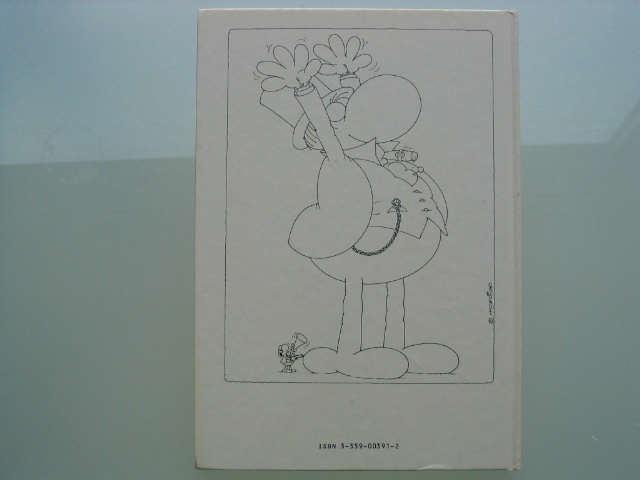
I don't know if there exist carnival cartoon books, but condom cartoon books exist. I even have one: Condomania by Peter Maddocks (Robson Books, UK, 1987, ISBN 0-086051-451-X). Fun with condoms...
At the back of the book you can read:
"This is truly a book of our times! Wickedly funny, it is also a guide to the real possibilities of condoms in daily life. It is certainly more informative than the TV ads...
Peter Maddocks has worked in Fleet Street for 30 years, appears regularly in the Sunday Express, Daily Telegraph and Mail on Sunday.
At first tempted to issue this book anonymously, he was emboldened to put his name to this very funny collection of cartoons when his son reminded him that he is, after all, a hardened veteran of the street of shame..nevertheless he claims that Condomania comes 'from a disgusting idea by Simon Maddocks'!"
ps: the place to be for carnival in Belgium is the city of Aalst!
Learn more:
Buy on Amazon
101 Uses for a comdom YouTube video
Rio Carnival
Aalst Carnival 2012 pictures and Belgian TV News Video
Monday, February 20, 2012
Wednesday, February 15, 2012
Ronald Searle the Great (Part 4) - Abroad
Article by JMB
Abroad
Until the
late 50s, Ronald Searle has devoted most of his work to England but his trips
abroad became an important source of inspiration for his drawings of the 60s.
In August-September 1947, Searle and three other British artists,
including Paul Hogarth, spent three weeks in Yugoslavia at the invitation of
the Peoples’ Youth of that country. They drew and painted in Bosnia, Croatia,
and Serbia. Sixty drawing by the group were exhibited at the Leicester
Galleries in London, the following February.
Street corner in Belgrade, 1947
In August 1948, Searle was traveling across Germany, Czechoslovakia and Poland
where he and Paul Hogarth, with a small group of sketchers, were sneaked in the
Intellectuals’ Congress for World Peace at Wroclaw.
Square Hradčanské náměstí in Prague, 1948.
Poland: a gypsy beggar in Zakopane; and a man at Cracow cathedral, 1948.
The United Nations High Commissioner for Refugees invited Searle and his
wife Kaye Webb as writer and reporter , to visit some of the camps in Austria, Italy, and
Greece. In this book they submitted all their reports.
The entire proceeds from the sale of Refugees 1960 went to the
United Kingdom Committee of the World Refugee Year.
Some drawings and texts of this book were first published in Punch magazine.
Ronald Searle drew illustrations and cartoons for several books by Alex
Atkinson. To begin with The Big City that was published by Perpetua in
1958. It is about London, whereas the
others books are travel accounts. The first of these "reports books" takes
place in the USA, but if the drawer went in this country already (*), the
writer lets know his account of a trip across America is made by a man who has
never been here. It presents "an Englishman’s view of America - as America
sees itself".
(*) In May 1957, on advice from his agent in the USA, Searle had made his
first travel to this country for working on an animated film for Standard Oil. During
the long legal preliminaries in New York he drew the city and his report appeared
in Punch. Then he stayed in Hollywood for the film storyboard and
making.
By Rocking Chair Across America was
published in the United States by Funk Wagnalls Co in 1959.
This book was simultaneously published by Perpetua in Great Britain in
1959, but it has a different title: U.S.A. for Beginners.
Note that the dust jacket of this British edition shows an
American cowboy, whereas the American edition shows a very British character.
In 1960 the next Atkinson’s & Searle’s book: Russia for Beginners
was published in Great Britain by Perpetua and in the United States, by The
World Publishing Co, this one titled: By Rocking Chair Across Russia. For
once both Searle and Atkinson never have been to this country in their lives.
But although this writer never dropped any line in Pravda, he was then
contributing to Punch for twelve years!
This book, translated into German, and then titled: Russland für
Ungläubige, was published by Kurt Desch Verlag in 1964.
The cartoon here above, which is printed on a double page of the book,
was first published in Punch magazine, on 19 August 1959.
Escape from the Amazon!, the last book by the
non-travelers team Atkinson & Searle, was published by Perpetua en 1964. It
has four chapters: By Rocking chair across Spain; By Rocking chair across
Sweden; By Rocking chair across France; and The Adventures of Mrs. Dyson. As to
the Amazon in question, she is an exuberant blonde.
During the
years 1958-1962, Searle had frequent return trips to America. During the
election campaign of 1960 he traveled several months, first with Nixon, then
with Kennedy. His report was published in Life magazine. In 1962, his trip
across Alaska was published in Holiday magazine.
In 1964, a selection of his American and Canadian drawings was gathered in book
form: From Frozen North to Filthy Lucre, with
remarks by Groucho Marx, was published in New York by Viking Press; and in
London by William Heinemann.
Searle in the Sixties was published by Penguin
Books in 1964. Many of its drawings originally appeared in: Holiday, Life,
Look, Sports Illustrated, Punch, Réalités, and Le
Canard Enchaîné. Some of them were also published in the book From
Frozen North to Filthy Lucre.
All drawings were done during Searle’s trips in the USA, in Ireland, in
Germany, in France, and during his last stay in England.
The book hereunder was published in France by Editions Stock in 1966. In
the same year it was also issued in Germany, in Great Britain and in the USA.
Of course their titles were different. The German version: Anatomie eines Adler – ein Deutschlandbuch was published in Munich by Kurt Desch Verlag. The English version: Haven’t We Met Before Somewhere? was
published in London by William Heinemann and in New York by Viking Press.
The author, Heinz Huber, looks uncompromisingly but humorously at his own
country. Some of these cartoons have already been published in press; the others
were made especially for this book.
Among numerous drawings, only 9 are in colour, some of them on
centrefold.
A set of cartoons titled "A tourist in Hamburg St. Pauli",
appeared in Holiday Magazine in January 1968. In 1969, Searle’s sketches
of Hamburg red lights district were first brought out in France as a soft cover
book published by Jean-Jacques Pauvert.
This book was republished by Weidenfel and Nicolson in London in 1970.
This hardback edition is titled Secret Sketchbook and subtitled The
Back Streets of Hamburg on the title-page.
Its dust jacket is not illustrated but as you see, a mention could
titillate some buyers.
In the next
book the illustrator travels no more; it’s just the main character of this
story who does. In addition to his adventures in almost every country on earth,
imaginative but liar Baron Munchausen even went to the moon.
This edition, brilliantly illustrated by over sixty Searle’s drawings was
published by Pantheon Books, in New York in 1969
Let us rest after all these trips and do take a while at enjoying some improbable
but hilarious brief encounters gathered in this book, which
was published by Pavilion Books in London in 1994.
Ronald Searle has vividly imagined just what would occur when the paths
of two famous characters momentarily cross.
Some cartoons of this book were first published in The New Yorker
magazine in 1992
article by JMB
Learn more:
Monday, February 6, 2012
Ronald Searle the Great (Part 3) - His England
Article by JMB
Searle’s short obituaries mainly mention St. Trinian’s cartoons, but the
artist has pictured the whole British society, in press and in numerous books
too.
Searle’s second book was published in France by Editions Montbrun; its
printing was done in December 1946 as a limited edition: 650 numbered copies (25
on Vélin Véron paper & 625 on Vélin Alfa paper) and 4 extra copies not for
sale (printed on Japon Imperial paper). A four pages text in French presents
the history of ballet in England and modern ballets’ creations at Covent Garden.
There are sixteen drawings featuring some dancers and some scenes of these
recent ballets (such as The Rake’s Progress here above).
Here are two scenes of Adam Zero, a ballet launched in april
1946. The other scenes are from the ballets: Les Patineurs, The
Prospect Before Us, Orpheus and Eurydice, Hamlet, Miracle
in the Gorbals, and Les Sirènes.
Searle drew humorous illustrations for books gathering some comic or odd
newspapers cuttings. Such collections where particularly appreciated at the
time: Three books titled: This England, where formerly published by The
New Statesman and Nation, in 1937, 1939, and 1946.
This fourth series of This England is the only one with
Searle’s drawings. It was published by Turnstile Press in 1949. Audrey Hilton
selected the newspapers cuttings.
In fact, all these newspapers cuttings came from readers who submitted
them to The New Statesman and Nation, where the funnier were edited
every week.
As to the newspapers cuttings collected by Denys Parsons, and edited in
this other book, many of them come from unidentified papers. So, one can wonder
if a lot of the howlers or misprints were not written by the editor himself.
Anyway, often they are amusing.
It Must Be True – It Was All in the Papers was
published by Macdonald in 1952. Although a large part of these newspapers
cuttings are told coming from foreign press, many illustrations feature typical
British characters.
The novel hereunder describes the life of a young provincial newcomer in
London. Through her experiences, the reader discovers some manners and customs
of the Londoners.
London-so Help Me! was published by Macdonald
in 1952.
Looking at London, and People Worth Meeting is
written by Searle’s wife. It is a collection of portraits of ordinary
Londoners, real people just on the very first rung of the social ladder. The
writer and the artist show a deep empathy for all these everyday characters.
This book was published by News Chronicle in 1953
The novel The Journal of Edwin was published by Hamish Hamilton in
1954; it was translated into French and published by Editions Denoël in 1956.
The main character lives in the suburbs. He keeps watching and making a
note of the events of his life and his circle of acquaintances. This gives the
reader an implacable but humorous self portrait of the average Englishman.
A Rake’s Progress is a famous set of 8 painting done by William Hogarth in 1732-33, and then etched. This series relates the story of an heir who, rather than following a path of wisdom in his new ease, joins the ways of vice, which led him in jail before he died insane. Hogarth met a success already with A Harlot's Progress which is a feminine counterpart of a similar curve of life: rising, downfall, and death.
Inspired by these fates, Searle transposes them to the brilliant
career of some contemporary British types: the athlete, the girlfriend, the
actor, the soldier, the novelist, the trade union leader, the doctor, the
Member of Parliament, the clergyman, and several more. If Hogarth’s aim was moralistic, Searle’s look over British society is
particularly ironic. His series The Rake’s Progress was first
published in Punch in 1954, a book was published by Perpetua in 1955 and
it was republished by Dennis Dobson in
1968.
The great lover progress is the only one to be shown in two drawings: boyhood,
and his very end in jail. Every other life is related in six scenes: promise,
emergence, success, triumph, downfall, and ruin.
Often, these ultimate ruins are just Searle’s humorous appreciation, as
many of these careers end when the honors continue. Such is the painter’s life
and his last vileness: being knighted, sitting right to Winston Churchill
during a banquet at the Academy of Fine Arts. You shall notice this character
has a goatee beard just like the one Searle used to keep all along his life!
In a book containing over 150 cartoons, Searle humorously shows various
aspects of British life.
Merry England, etc. was published by Perpetua
en 1956.
At right, the cartoon refers to the Churchill portrait by Graham Sutherland, which was offered this statesman on his 80th anniversary in 1954. This
painting offended many people of the establishment, as it showed the old prime
minister features with no flattery. This artwork was even said to be just a
caricature. In his speech of thanks, Lord Winston called it "a particular
example of modern art" and his wife later destroyed the painting privately.
This softcover book was published by Penguin Books in 1960.
It contains a choice of cartoons published in: Souls in Torment, The
Rake’s Progress, and Merry England, etc.
In the book Take One Toad, Searle looks into a much older
England; the one of an epoch when medicine was based on popular beliefs in
strange remedies’ ingredients and in extravagant cures’ attempts. Successfully,
this pharmacopeia and these therapies are no more used, but their strangeness
is really funny for all present day readers.
Take One Toad was published by Dennis
Dobson in 1968
At right, is a photo of the original work which is
only reproduced in black & white in this book. In fact, all the
illustrations of Take One Toad come from watercolour drawings, but the book contains
twice more pages in black & white than in colours;
too bad for these excellent works...
A choice of cartoons of Searle’s British period was published by
Pavilion in 1985. This anthology gathers some works formerly published in ten
of his books.
These times of Golden Oldies run up to 1961 when Searle lefts
England definitely, moving to France. We shall mention some of his books
connected to this country, later on.
Prior to Searle’s books and France, our next part will tackle some other
countries, because the artist has travelled a lot too.
article by JMB
Learn more:
Subscribe to:
Posts (Atom)